

Why every school needs a planned social media calendar
A school social media content calendar maps key dates, audiences, and stories to specific posts over time - turning reactive, last-minute posting into intentional storytelling that supports admissions, retention, reputation, and staff recruitment.
Most school marketing teams are small but face huge expectations: covering academics, arts, athletics, events, staff culture, alumni, and emergencies across multiple channels. Without a calendar, you default to whoever shouts loudest - usually the latest game - while critical admissions messages never get airtime.
Planning doesn't mean scripting every post months ahead. Think of it as scaffolding: lock in the immovable pieces and leave space for day-to-day storytelling that keeps your feed alive.
1. Start with admissions timelines and parent questions
Parents often begin researching 8–12 months before enrollment, scanning social channels long before they ever inquire. Sit down with your admissions lead and map three things on a single timeline:
- Key dates - inquiry season, open houses, application deadlines, decision dates, re-enrolment windows
- High-priority entry grades - e.g. Reception, Year 7, Year 12
- Most-asked questions - "Who will teach my child?", "What is daily life really like?", "Will my child be known?"
Then translate those into content themes. If Year 7 is a major entry point and your open day is in October, plan a September mini-series: "A Day in Year 7," "Why Our Students Chose This School," "What Parents Wish They'd Known Before Applying."
The key shift: Move from "What do we feel like posting?" to "What do families need to see before each decision point?" This is the single biggest upgrade most schools can make.
2. Match content to platforms and audiences
Every post should answer two questions: who is this for, and where do they spend time online?
- Current and prospective families
- Day-in-the-life, classroom wins
- Behind-the-scenes, Reels
- Parents and grandparents
- Announcements, event details
- Fundraising, longer captions
- Students and younger parents
- Student-led "day in the life"
- Fun takes on traditions
- Staff recruitment, alumni
- Thought leadership
- Achievements, promotions
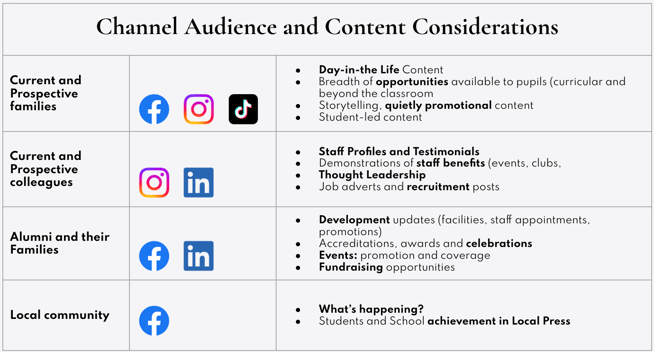
For each week, assign one primary audience and platform to every planned post - e.g. Monday: prospective Year 7 parents on Instagram; Wednesday: current parents on Facebook; Friday: prospective staff on LinkedIn. This prevents copy-pasting everything everywhere.
3. Empower faculty and student storytellers
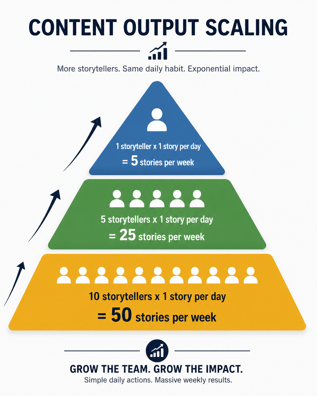
One marcomms person can't capture the true breadth of school life. Train more storytellers while keeping publishing centralised.
- Core strategist (you) - owns goals, calendar, and channels
- Faculty storytellers - teachers, coaches, arts staff who submit photos, quotes, or short clips
- Student storytellers - carefully selected students who capture peer-to-peer moments
Run a short "storytelling 101" session for interested staff. Give them a simple brief:
- 1–2 clear photos or a 10–30 second video
- One sentence: "What happened?"
- One sentence: "Why does it matter for students?"
Provide branded Canva templates for testimonials, staff spotlights, and event recaps. A teacher can drop a photo and quote in under five minutes - you edit the caption and schedule it.
Real-world result: One UK high school moved from 1 marketer posting alone to 10 trained faculty contributors, increasing weekly stories from 5 to 50 - without adding central staff hours.
4. Use data to refine what you post
Start with the analytics already inside your platforms and look for patterns over 30, 90, and 365 days. Track three things:
- Volume - How many posts per week, per platform?
- Engagement - Which themes (year groups, subjects, values) consistently get saves, shares, or comments?
- Admissions signals - Do inquiry spikes correlate with storytelling about certain year groups or programmes?
Once a month, spend 30 minutes adjusting:
- Double down on formats that work (e.g. student-led Reels) at key moments
- Reduce generic "happy Friday" posts that get soft likes but no clicks or comments
- Check that the next month still covers your admissions milestones and major events
Ready to take the guesswork out of your school's social media? Reach out to us if you'd like to receive a #ContentStrategy Planning Calendar or our #ContentStrategy Blueprint - two practical resources designed to help your team post with purpose, every single month.